
What is an implant, exactly?
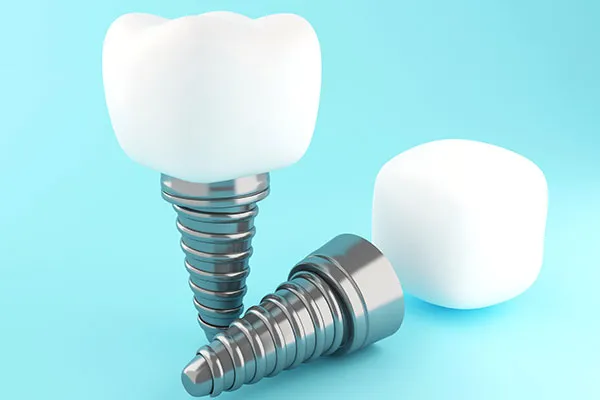
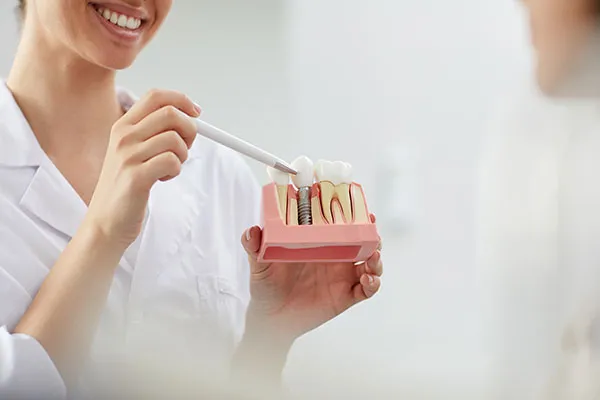
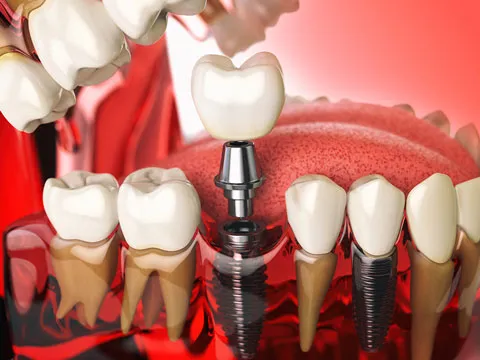
Think of a little, strong screw made of titanium. This is your new "root."
The Root: We put the titanium screw into your jawbone. Titanium is great because your bone heals around it and holds it tightly, much like a real tooth root.
The Connector: After that, we add a little piece called an abutment. This is like the “bridge” that connects the screw to the teeth.
Finally, we manufacture a porcelain/zirconia tooth (the crown) that fits precisely with your existing teeth. We either snap it on or screw it onto the connection, and you’re ready to go.
Why do we do it this way?
Unlike dentures, which can slip around, or bridges, which require us to grind down the healthy teeth next to the gap, an implant is **independent**. It stays in your mouth permanently, you brush it just like a real tooth, and it helps keep your jawbone strong.
Treatment Summary
Operation Time
Single Implant 30min.
All of the Treatment 3-6 Month
All of the Treatment 3-6 Month
Anesthesia
Local/General Anesthesia
Hospitalization
No
Sensibility
1 Week
Back to Work
Next Day
Complete Healing
3-6 Month
Advantages of Dental Implant Treatment in Turkey
There has been remarkable demand for dental implant treatment recently as in all health care services in Turkey. The most apparent reasons are the high-quality service, competitive prices, competent doctors and health care personnel at the clinics in Turkey.
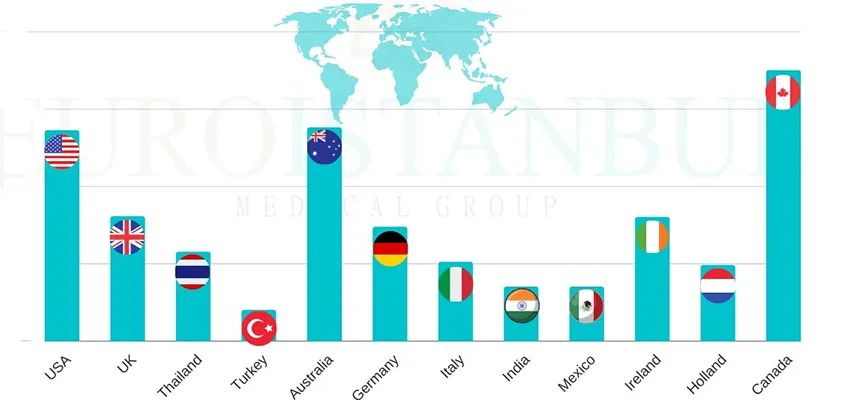
Dentists in Turkey perform ten times more operations than their counterparts in Europe or America. Other sub-sectors serving dentists have been highly developed over the years. Dental implant prices in Turkey correspond to one-fifth of the USA, Canada and Gulf countries and one-quarter of Europe.
Additionally, Istanbul is one of the most important tourism destinations. Therefore, it offers sightseeing and cultural trip opportunities for patients.
Dental implant treatment in Turkey all-inclusive dental packages prevent patients from dealing with other unnecessary work (accommodation, transfer, etc.) and allow them to concentrate on their treatments.
All Inclusive Packages
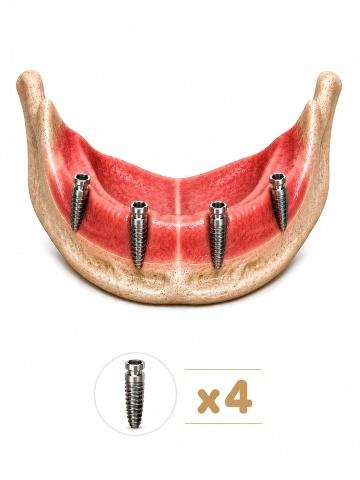
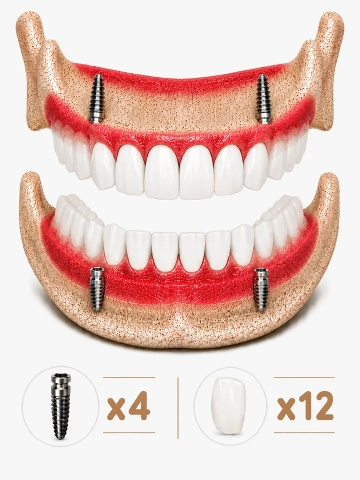
All-on 4 Anterior Implants, All-inclusive Package
Original price was: €4,950.€3,950Current price is: €3,950.
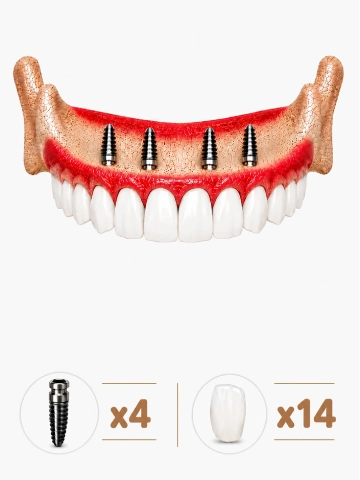
All-on 4 Single Jaw Implants, All-inclusive Package
Original price was: €5,200.€4,200Current price is: €4,200.
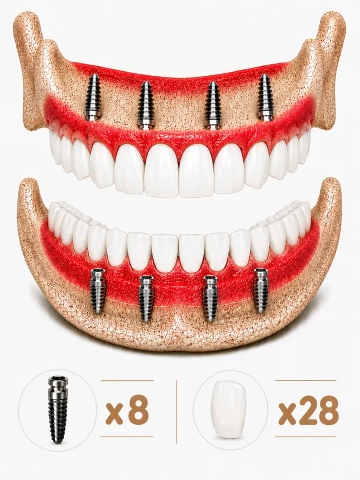
All-on 4 Full Mouth Implants, All-inclusive Package
Original price was: €10,400.€6,950Current price is: €6,950.
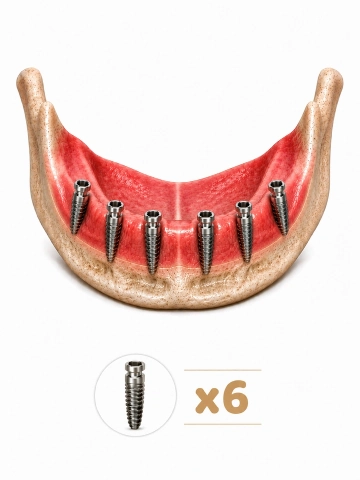
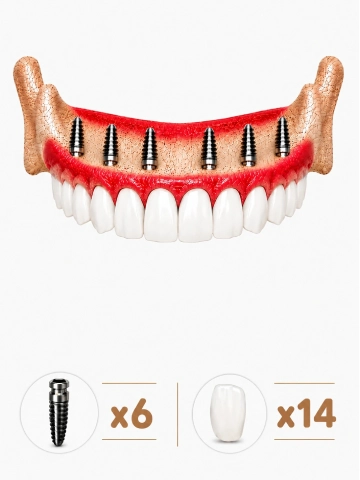
All-on 6 Single Jaw Implants, All-inclusive Package
Original price was: €6,200.€4,950Current price is: €4,950.
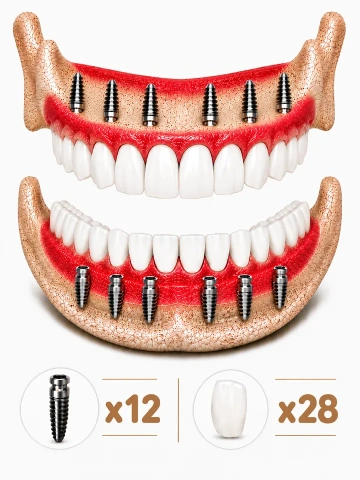
All-on 6 Full Mouth Implants, All-inclusive Package
Original price was: €12,400.€8,950Current price is: €8,950.

Free Consultation
Find out now what kind of dental treatment you need!

How It Feels?
The Plan of Action (Step by Step)
- The Anchor: We put the titanium post into the bone. You won’t feel anything! Most people report it feels like getting a simple filling.
- The Wait: We wait a few months for the bone to “hug” the implant. This is the time to heal. You won’t even know it’s there.
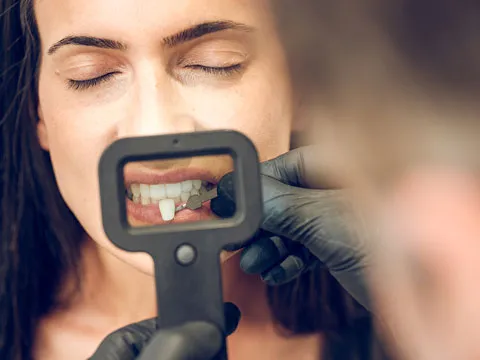
- The Reveal: We make an imprint of your mouth to make your replacement tooth. No needles here—just some scans or molds.
- The Finish: We put on your unique crown. You leave with a big grin!
A Quick Check of Reality
The most important thing to remember is that this is a long race, not a short one. The full procedure normally takes 3 to 6 months since we have to wait for your bone to mend around the implant. You need to be patient, but if you take care of it, it will last a lifetime. Modern technology doesn’t let you “grow” a new tooth, but this is the closest thing to it!
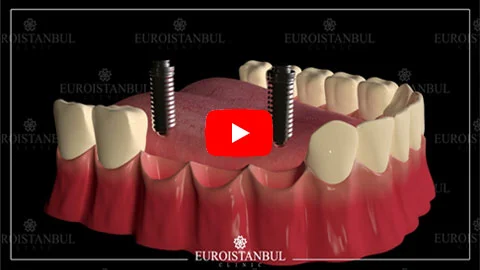
Before & After Photos
What are
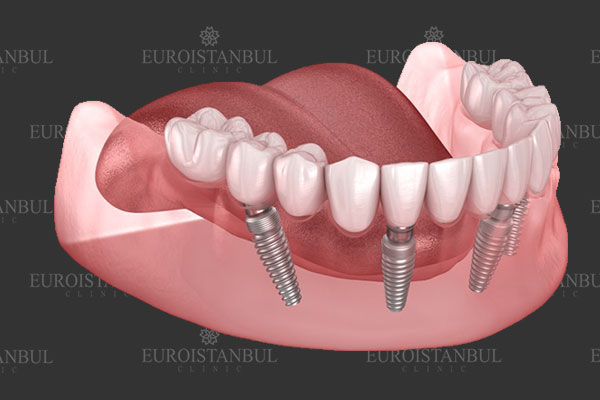
All-on 4 Dental Implants?
If a single implant is like replacing a single tree in a garden, All-on-4 is like installing a whole new, pre-grown hedge all at once.
It’s a specialized technique designed for people who have lost most or all of their teeth in their upper or lower jaw. Instead of replacing every single missing tooth with its own individual screw (which would be expensive and a lot of surgery), we use just **four strategic anchors** to hold up an entire row of teeth.
It’s a specialized technique designed for people who have lost most or all of their teeth in their upper or lower jaw. Instead of replacing every single missing tooth with its own individual screw (which would be expensive and a lot of surgery), we use just **four strategic anchors** to hold up an entire row of teeth.
Is the implant harmful to health?
The short answer is no, dental implants are not harmful to your general health. In fact, for most people, they actually improve health by allowing you to eat a better diet and preventing your jawbone from shrinking.
The Material (Biocompatibility) The "screw" part of the implant is almost always made of Titanium (or sometimes Zirconia). Titanium is what surgeons use for hip and knee replacements. It is "biocompatible," which is a fancy way of saying your body doesn't see it as a "bad guy" or a germ. Your bone actually likes titanium so much that it grows right onto it and locks it in place.
The Material (Biocompatibility) The "screw" part of the implant is almost always made of Titanium (or sometimes Zirconia). Titanium is what surgeons use for hip and knee replacements. It is "biocompatible," which is a fancy way of saying your body doesn't see it as a "bad guy" or a germ. Your bone actually likes titanium so much that it grows right onto it and locks it in place.
What can I eat after the implant is planted?
This is the most important part of your "homework" after the procedure! Think of the implant like a **newly planted sapling** in a garden—if you kick it or pull on it too hard before the roots grow into the soil, it won't stay.
Phase 1: The First 24 Hours (The “Liquid” Phase)
Right after surgery, your mouth will be numb and the site is fresh. Stick to liquids, but **no straws!** The suction from a straw can pull on the stitches and cause bleeding.
Smoothies: Packed with nutrients (just drink from the cup).
Protein Shakes: Great for healing.
Lukewarm Soup: Nothing piping hot, as heat can increase swelling.
Yogurt & Pudding: Easy to swallow without chewing.
Phase 2: Days 2 to 14 (The “Fork-Mashable” Phase)
Once the initial tenderness fades, you can move to soft foods. A good rule of thumb: If you can mash it easily with a fork, you can eat it.
Proteins: Scrambled eggs, flaky fish (like salmon), tofu, or finely shredded chicken.
Grains: Oatmeal, soft pasta (overcook it slightly), mashed potatoes, or risotto.
Fruits/Veg: Bananas, avocados, steamed carrots, or applesauce.
Dairy: Cottage cheese, soft cheeses, or Turkish yogurt.
Phase 3: The “Healing Wait” (3–6 Months)
Once your gums have healed (usually after 2 weeks), you can go back to a mostly normal diet, but avoid the “Danger Zone” foods on the side of your mouth where the implant was placed until the permanent crown is attached.
The “Stay Away” List (For at least 2 weeks)
Crunchy/Hard: Chips, nuts, ice cubes, or hard crusty bread (like baguettes).
Sticky/Chewy: Taffy, gum, caramel, or gummy bears (these can pull on stitches).
Spicy/Acidic: Hot peppers, lemons, or tomatoes can sting the surgical site.
Small Seeds: Poppy seeds or sesame seeds can get trapped under the gum line and cause an infection.
Side Effects of Dental Implant Treatment
It is very important to distinguish between normal healing (what almost everyone feels) and actual complications (what we try to avoid).
Think of it like getting a piercing or a small surgery your body needs a few days to realize that the new titanium "guest" is a friend, not an enemy.
Think of it like getting a piercing or a small surgery your body needs a few days to realize that the new titanium "guest" is a friend, not an enemy.
1. The “Expected” Side Effects (Normal)
These are not signs that something is wrong; they are just your body’s way of healing. They usually peak around Day 2 or 3 and disappear by Day 7.
Mild Swelling: Your cheek or gums might puff up. It’s the most common side effect.
Minor Bruising: You might see a little yellow or blue on your skin or gums.
Small Amount of Bleeding: Seeing pink-tinged saliva for the first 24 hours is normal.
Tenderness: The area will feel “tight” or sore once the numbing wears off, but it’s usually manageable with basic over-the-counter pain relief.
2. The Rare “Oops” Moments (Complications)
These happen in a very small percentage of cases (usually less than 5%), but as a dental clinic, We keep a close eye on them
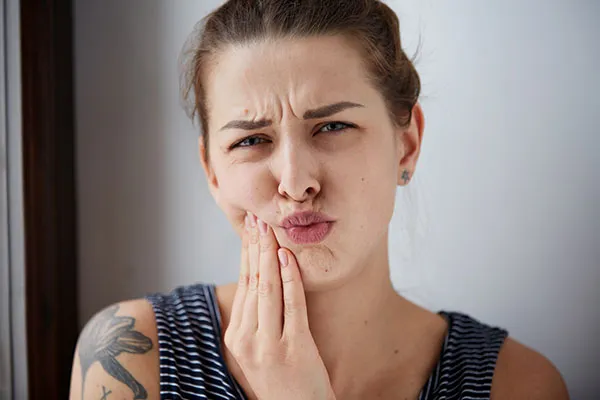
Infection: If bacteria get into the site, it can cause “Peri-implantitis” (essentially gum disease for implants).
Nerve Tingling: If an implant is placed too close to a nerve, you might feel a “pins and needles” sensation or numbness in your lip or chin. This is very rare with modern 3D X-rays.
Sinus Pressure: For upper teeth, the implant can sometimes get a little too close to your sinus “air pockets,” making you feel like you have a stuffy nose or a cold.
The “Stay Away” List (For at least 2 weeks)
Crunchy/Hard: Chips, nuts, ice cubes, or hard crusty bread (like baguettes).
Sticky/Chewy: Taffy, gum, caramel, or gummy bears (these can pull on stitches).
Spicy/Acidic: Hot peppers, lemons, or tomatoes can sting the surgical site.
Small Seeds: Poppy seeds or sesame seeds can get trapped under the gum line and cause an infection.
If you experience any of the following "Red Flags," don't wait for your check-up—give the office a call right away
When should you call us immediately?
- Throbbing pain: That gets worse after Day 4 instead of better.
- Visible Looseness: The implant should feel like a rock. If it wiggles, call us.
- Fever or Chills: This is a sign of a systemic infection.
- Persistent Numbness: If your lip still feels "asleep" 24 hours after surgery.
- Pus or Bad Taste: A sign that bacteria are trying to move in.
Dental Implant Prices in Turkey
€595
Single Implant
- Free Panoramic X-Ray
- Local Anesthetics
- Laboratory Fees
€475
Bone Graft
- Free Panoramic X-Ray
- Local Anesthetics
- Laboratory Fees
Dental Services


Latest Post
in Three Steps Plan Your Treatment
Request a Consultation
Call or contact us via WhatsApp or e-mail. We offer you a free consultation without obligation.
Make an Appointment
If you are happy with the consultation and the quotation, the next step is to make an appointment with us!
Book Your Flight
Once the date has been agreed, you need to book the flight and send us the ticket to book your stay.
Request a Call Back
If you’d like to talk to our consulting team, contact us via the form and we’ll get back to you shortly.

Subscribe to our e-newsletter
Enter your e-mail address to be instantly informed about our news, announcements, opportunities and campaigns.
Euro Istanbul Clinic
Headquarters
Polat Tower Residence, 445
Istanbul, Turkey
Istanbul, Turkey
Our locations
Where to find us?





Treatments will be provided in contracted health institutions that have a health tourism authorization certificate.


©2026 Euro Istanbul. All rights reserved.
EURO İSTANBUL SAĞLIK HİZMETLERİ SAN. TİC. LTD. ŞTİ.

